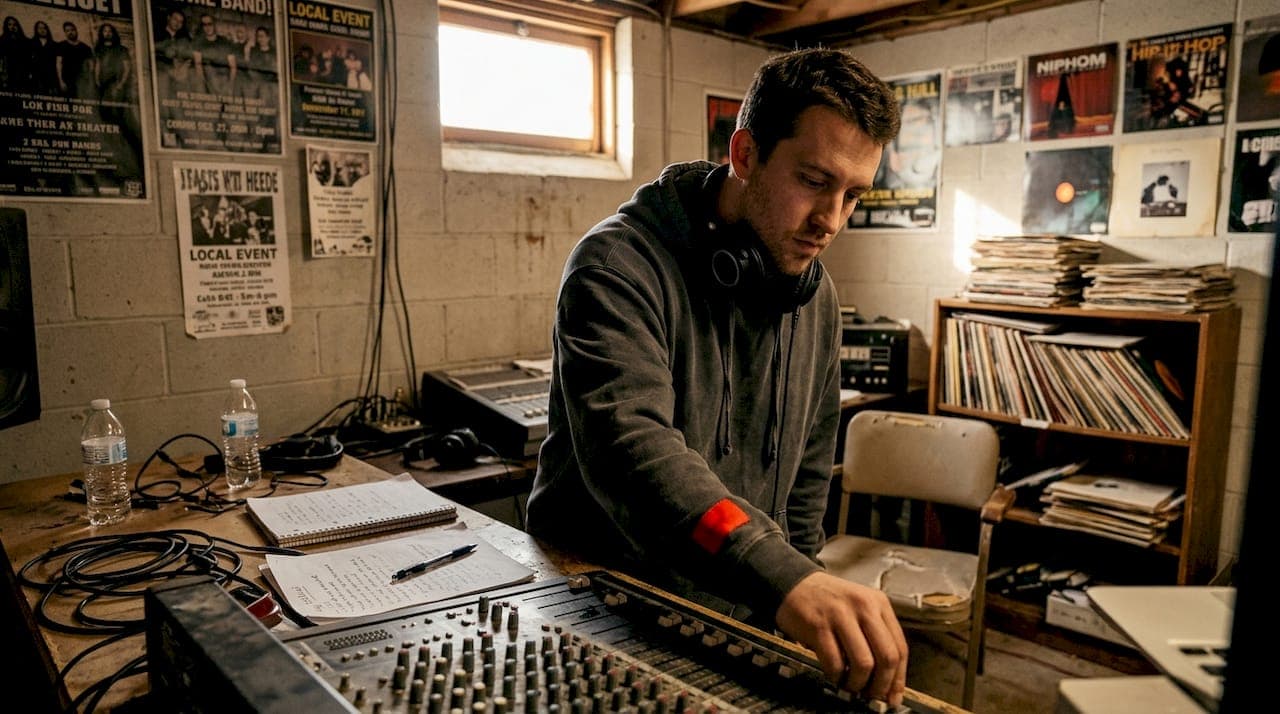
Most people assume that if a label wants to survive, it needs to chase the sound that moves units. Clean mixes. Radio-ready hooks. Nothing that makes a program director flinch. That logic makes sense on paper, and a lot of labels have built decent careers following it. But Killing Field Records, out of Lincoln, Nebraska, never bought into that playbook. Not even a little. The whole point, from day one, was to make music that felt dangerous. Music that sounded like it came from somewhere real, not somewhere optimized. This isn't a story about failing to go mainstream. It's a story about refusing to. And understanding that distinction changes everything about how you hear what this label puts out.
Table of Contents
- The roots: Rejecting safety for authenticity
- Underground grit: What makes the Killing Field Records sound
- Why mainstream polish never fit the mission
- The impact: Scene, collectors, and the legacy of sounding unsafe
- Why sounding unsafe is the real badge of authenticity
- Explore the Killing Field Records movement
- Frequently asked questions
Key Takeaways
| Point | Details |
|---|---|
| Authenticity over safety | Killing Field Records rejects mainstream polish, prioritizing raw storytelling and sound. |
| Impact on culture | Their unfiltered music has built a loyal collector following and influenced the underground scene. |
| Sounding 'unsafe' is intentional | Lo-fi mixes, harsh textures, and confrontational lyrics are deliberate marks of the label’s identity. |
| Commercial risks | Resisting ‘safe’ music limits chart success but strengthens scene respect and underground credibility. |
The roots: Rejecting safety for authenticity
Lincoln, Nebraska is not a city that gets name-dropped in hip hop conversations very often. That's exactly why it matters here. When you're not in New York, not in Atlanta, not in Los Angeles, you don't have the infrastructure that tells you what your music is supposed to sound like. You just have the scene in front of you, the stories around you, and whatever equipment you can get your hands on. That's the environment that shaped Killing Field Records.
The label wasn't built to replicate what was already working somewhere else. It was built to document what was happening right here, in a city that the industry largely ignores. As the Field Notes blog makes clear, Killing Field Records was created to challenge music industry norms and reflect the gritty realities of its local scene. That's not marketing language. That's the actual foundation.
When the founders looked at what "safe" hip hop sounded like, they saw something that felt dishonest. Polished vocals sitting on top of perfectly compressed 808s, lyrics sanded down so they don't scratch anyone, hooks designed to feel familiar the first time you hear them. That's a product. It's not a document. And the underground scene in Lincoln had stories worth documenting, not packaging.
"The underground doesn't need your approval. It needs your honesty."
The guiding principle became rawness as a form of respect. Respect for the people whose stories were being told. Respect for listeners who could handle the truth. Respect for a craft that predates the streaming algorithm and will outlast it.
Here's what that philosophy actually looked like in practice:
- Unfiltered lyrical content: No softening the edges of real experiences to make them more palatable. If the story involves violence, addiction, poverty, or rage, you hear it as it was lived.
- Production that breathes: Beats that don't feel vacuum-sealed. Room noise, imperfect timing, textures that remind you a human being made this.
- Vocal mixes with presence: Not buried in reverb to sound "atmospheric," not over-compressed to sound "professional." Present. In your face. Real.
- Scene-specific narratives: References, locations, and situations that mean something to people who were actually there, not crafted for universal relatability.
You can hear the difference the moment you compare a KFR release to something built for Spotify playlists. One sounds like it was made for you. The other sounds like it was made for everyone, which usually means it was made for no one in particular. Understanding how mixing styles differ between underground and commercial work makes this contrast even sharper. The label's artist roster reflects this ethos across every name on it.
Underground grit: What makes the Killing Field Records sound
Let's get specific, because "raw" and "gritty" are words that get thrown around until they lose meaning. What does the Killing Field Records sound actually consist of? What are the deliberate choices that make a KFR track feel like it does?
Start with the low end. On a commercial release, the bass is controlled within an inch of its life. Limiters, clippers, multiband compression, all working together to make sure nothing ever gets too loud, too distorted, or too unpredictable. On a KFR record, the low end has weight and danger. It might clip. It might rattle your speakers in a way that feels unruly. That's not an accident. That's intent.
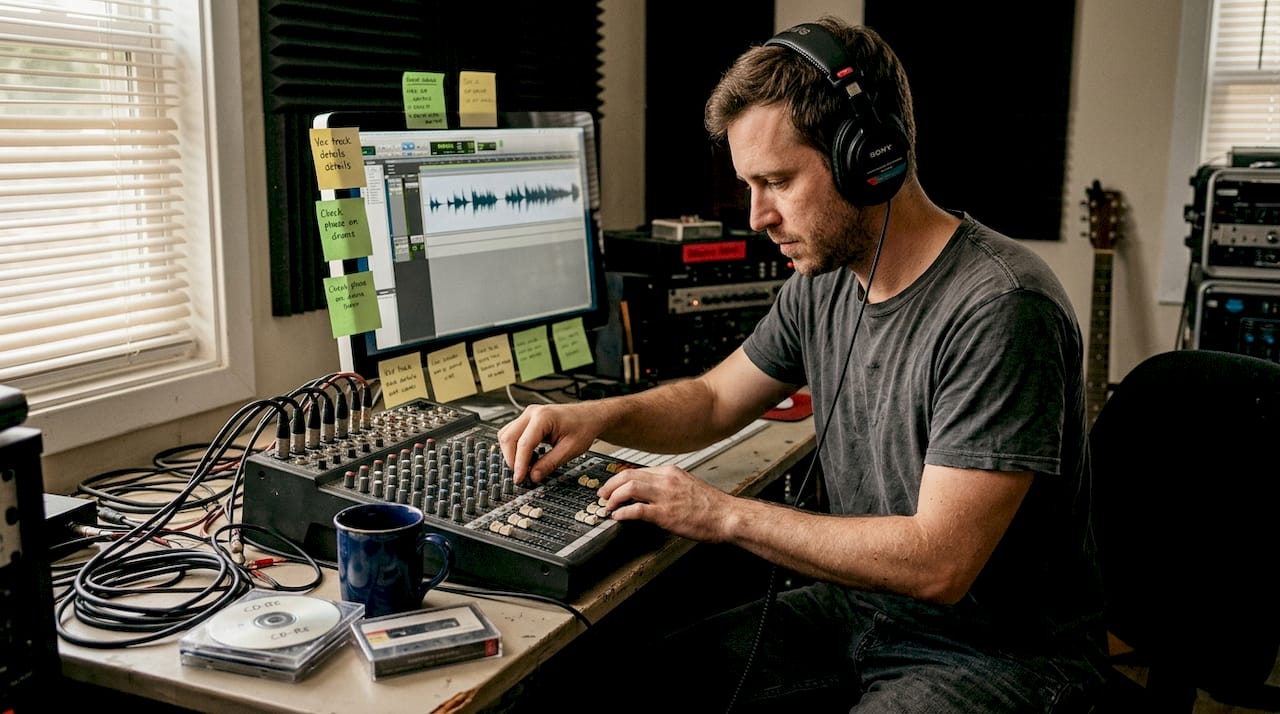
The underground mixing explainer breaks down exactly why KFR intentionally departs from safe, radio-friendly mix choices. The philosophy is baked into every technical decision. Distortion isn't a problem to be fixed. It's a texture that tells you something. Harsh high-mids in a vocal aren't a mistake. They're the sound of someone actually yelling, actually feeling something.
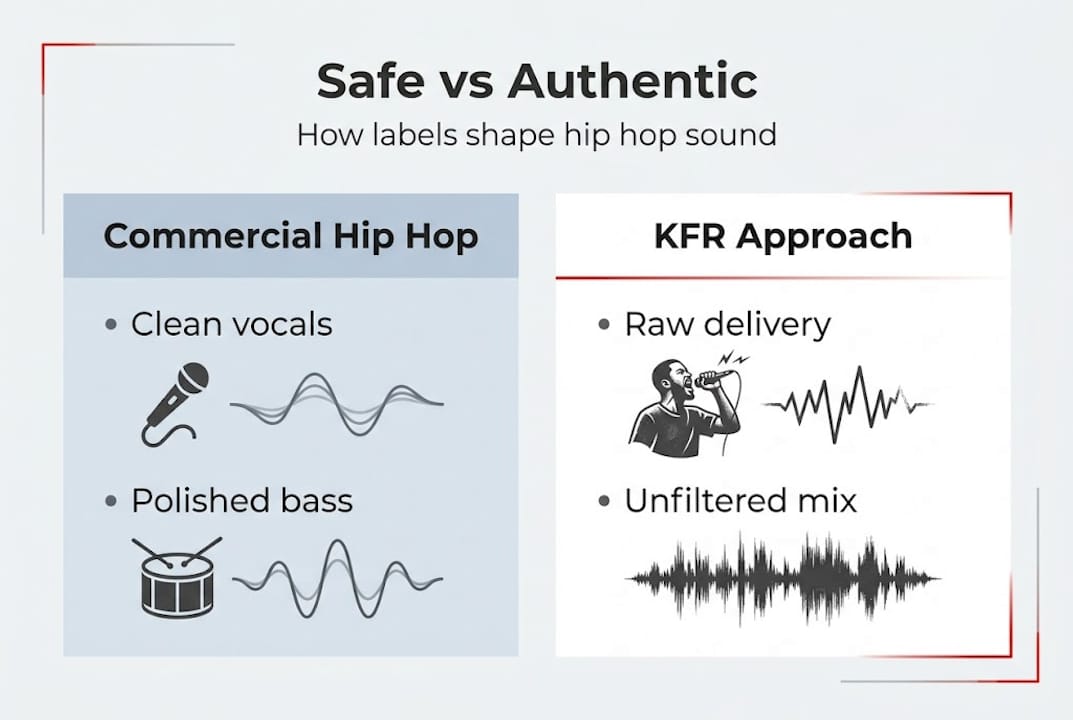
| Element | Commercial hip hop | Killing Field Records |
|---|---|---|
| Vocal processing | Heavy compression, de-essing, smooth | Minimal smoothing, raw presence |
| Low end | Tightly limited, controlled | Heavy, sometimes distorted |
| Atmosphere | Reverb-heavy, "cinematic" | Dry, close, confrontational |
| Lyrical themes | Aspirational, broadly relatable | Specific, unfiltered, local |
| "Mistakes" | Edited out | Often kept for authenticity |
Artists like enemyX and Cryptic-X embody this approach. Their deliveries aren't polished for comfort. They're recorded to capture the actual energy of the performance, which sometimes means a vocal crack stays in, a breath stays audible, a line lands harder than the limiter would prefer.
Pro Tip: If you're a collector trying to identify authentic underground releases, listen for the imperfections. A track that sounds "too clean" has usually been processed to remove the very things that give it identity. The rough edges are the fingerprints.
This is why "mistakes" are a feature, not a bug, in the KFR catalog. A vocal take where you can hear the artist's jaw tighten on a hard consonant? That's real. A beat where the sample crackles slightly because it came from a worn record? That's history. Laundering those details out of a mix is like laundering the blood out of a war photograph. You end up with something that looks cleaner but means less.
Why mainstream polish never fit the mission
Here's the tension that every underground label eventually faces. Commercial polish is not just an aesthetic choice. It's an economic incentive. Sync licensing, playlist placement, radio rotation, brand partnerships, all of these revenue streams reward music that sounds a specific way. Safe. Predictable. Inoffensive. The financial logic is not stupid.
But for Killing Field Records, chasing that logic would have meant dismantling the entire reason the label exists. As the Blxxdshot signing analysis makes plain, many artists see mass-appeal sound as a direct threat to local storytelling and scene-specific narratives. You can't tell the truth about Lincoln, Nebraska in a track that's been optimized for listeners in 47 countries who share no context with you.
Consider the trade-offs in real terms:
| Path | Short-term gain | Long-term cost |
|---|---|---|
| Mainstream polish | Playlist placement, wider reach | Loss of scene identity, credibility erosion |
| Underground authenticity | Smaller audience, less revenue | Lasting loyalty, collector value, cultural impact |
The numbered breakdown of what mainstream pressure actually does to grassroots creativity:
- It flattens specificity. Stories that are too local, too raw, or too confrontational get softened until they're unrecognizable to the people who lived them.
- It prioritizes hooks over honesty. The catchiest version of a story replaces the truest version.
- It shifts the artist's relationship to their audience. Instead of speaking to people who know, you start performing for people who might.
- It creates a feedback loop. Once you start chasing approval, every creative decision gets filtered through "will this work for them" instead of "is this true."
- It erases the scene. When every artist from a local scene starts sounding like they could be from anywhere, the scene itself stops existing as a distinct cultural entity.
The underground hip hop label overview at Killing Field Records tells a different story. One where the scene is the point, not a stepping stone to something bigger. That's a deliberate, principled stance, and it has costs. Fewer streams. Less mainstream press. No sync placements in car commercials. But it also means the music stays honest, and honesty has a longer shelf life than trend-chasing ever will.
The impact: Scene, collectors, and the legacy of sounding unsafe
Here's what happens when a label holds its line for long enough. A culture builds around it. Collectors start paying attention. Other artists take notes. The music starts to mean something beyond the individual tracks.
Killing Field Records has built exactly that kind of legacy. The full discography is a document of uncompromised output, and collectors value KFR's output for its rawness and rarity, a distinction not found in safe releases. That rarity isn't just about limited pressings or physical scarcity. It's about the rarity of music that actually sounds like it came from somewhere specific and refused to apologize for it.
What does that collector culture look like in practice?
- Physical releases become artifacts. When a label's music carries genuine identity, the physical object (vinyl, cassette, CD) becomes something worth owning, not just streaming.
- The back catalog gains value over time. Releases that felt confrontational or difficult when they dropped often become the ones people chase years later.
- Word of mouth replaces algorithm. Fans who connect with authentic material tell other fans. That's slower than a viral moment, but it's stickier.
- Artists from the scene carry the ethos forward. When younger artists see a label holding its ground and earning respect for it, they understand that there's a path that doesn't require selling out.
"Grit doesn't expire. Trends do. That's why the catalog still hits."
The influence on the local scene has been real. Artists in Lincoln and the surrounding area have watched KFR operate and learned something important: you don't have to sound like you're from somewhere else to be taken seriously. You can sound like exactly where you're from, and that specificity is the thing that makes you irreplaceable. The Field Notes section of the site documents this ongoing conversation between the label and its scene, making it a living record of underground hip hop culture in the Midwest.
Why sounding unsafe is the real badge of authenticity
I'll be straight with you. The market's embrace of safe music doesn't just limit commercial options. It actively erases underground narratives. When the algorithm rewards the smoothest version of a sound, the rougher, truer versions get buried. Not because they're worse. Because they're harder to monetize.
What I've learned, and what KFR's catalog proves, is that noise, imperfection, and confrontation are not obstacles to value. They are the value. Collectors aren't hunting for KFR records because they couldn't find something cleaner. They're hunting for them because clean doesn't carry what these records carry. A track like Locked Up - Fucked Up doesn't hit because it's polished. It hits because it sounds like it was made under pressure, by someone who had something to say and no patience for softening it.
Standing apart from the mainstream isn't a consolation prize for labels that couldn't break through. It's a deliberate strategy for longevity among people who actually care about music. Trends shift. Scene heads don't forget. The artists who built their sound around truth rather than trend are the ones still getting played a decade later.
My challenge to any artist reading this: stop asking whether your music sounds safe enough for radio. Ask whether it sounds true enough to last. Those are very different questions, and only one of them leads somewhere worth going.
Explore the Killing Field Records movement
If you've read this far, you already know you're not looking for music that plays it safe. You want something that hits with intent, something that sounds like it came from a real place and didn't bother to apologize for it.

The best way to feel what Killing Field Records is actually about is to go straight to the source. Dig into Killing Field Records' roster and find the artists whose stories speak to you. Work through the label's discography and hear how the sound has evolved without ever losing its edge. And if you want the full picture of what this label stands for, start at the Killing Field Records home and let the catalog do the talking. This is underground hip hop that was built to last, not to trend.
Frequently asked questions
What does it mean for a label to 'sound unsafe'?
It means intentionally producing music that avoids commercial polish, embracing rawness, risk, and authenticity. Killing Field Records purposely steers clear of clean, commercial sound by deliberate choice, not circumstance.
Why would artists avoid making their music more mainstream?
Some artists value street credibility and local storytelling over chart success, believing authenticity matters most. Pushing for mass-appeal risks diluting genuine narratives from local scenes, which is a trade many underground artists refuse to make.
How has Killing Field Records influenced underground hip hop collectors?
Its raw and rare releases are highly sought after by collectors who prioritize authenticity over mainstream popularity. Collectors seek KFR's gritty, unsanitized releases precisely because that quality is absent from safe, commercially processed music.
Does being 'unsafe' limit a label's commercial success?
Yes, but it builds lasting credibility and a dedicated fanbase that values honesty and originality above sales. The trade-off is fewer streams in exchange for a catalog that actually means something to the people who find it.